


Content creation that stops the scroll
Platform-optimized creation that wins discovery, builds engagement, and converts across every channel.

Content that connects. Strategy that scales.
Great content gets discovered, engages audiences, and drives action. Today's platforms reward what works: quick, authentic, algorithm-friendly. We create content built for how people actually consume—short-form video, static posts, Stories, Reels—optimized for AI-powered feeds and social search.
Across Meta, YouTube, TikTok, LinkedIn, and Google, we combine trend intelligence, performance data, and creative production to build content flywheels that work nationally and locally. Our systems handle creation, curation, approval workflows, and cross-channel publishing. You get the volume, consistency, and performance you need without the operational chaos.
- Add a background color to the section div above ↑ this Timeline section. This is will help hide the progress line overflow.
- Add z-index-2 class to the section div above ↑ this Timeline section. This will ensure the oveflowing progress line from the Timeline section below ↓ is hidden underneath it.
Where creativity meets performance.
Content calendars
Strategic monthly calendars that align every asset to brand goals, cultural moments, and platform opportunities. We map content to the customer journey—awareness to conversion—ensuring the right message hits the right audience at the right time. Coordinated across channels. Optimized for performance. Built to scale across all locations.
Short-form video
Platform-native video engineered for today's attention economy. Strong hooks in the first three seconds. Scroll-stopping pacing. Captions and text overlays for sound-off viewing. Trend-informed concepts that feel authentic, not forced. Optimized for TikTok, Instagram Reels, YouTube Shorts, and LinkedIn. Content that algorithms reward and audiences actually watch.
Brand storytelling
Authentic narratives that build trust, authority, and community connection. We craft stories that resonate because they're real—customer testimonials, behind-the-scenes moments, founder stories, employee spotlights, community impact. Content that humanizes your brand and turns followers into advocates. Storytelling that scales across markets while maintaining local relevance.
Executive video coaching
Transform your leadership team into confident on-camera communicators. We train executives to deliver authentic, engaging video content that builds thought leadership and brand authority. From LinkedIn video strategy to TikTok presence, we help leaders show up naturally on camera. Coaching that turns reluctant executives into content assets.

Your content engine for multi-location performance
We become your content operations team—strategizing, producing, and publishing content that performs across every market. Volume without burnout. Consistency without compromise. Results that prove ROI.
Case study results | SCORE
Annual impressions
Local chapter Facebook and LinkedIn content delivered 3.6 million impressions during FY24, garnered from 88.1K local posts. Scaling social media helps SCORE build brand awareness in each community it serves.
Engagement rate
Average engagement rate for local Facebook and LinkedIn posts in FY24, far exceeding industry benchmarks. This signals strong alignment with local audiences and high-quality, consistent content distribution.
LinkedIn audience growth
LinkedIn audiences grew 16.7% during FY24, across 220 chapter pages. Local Facebook page audiences grew as well, with a 1.5% increase.
We delivered these results. We can deliver yours.
One brand. Many markets. Total control. Hiper unifies strategy and execution across national and local channels, giving brand leaders command of the narrative while empowering each location with proven playbooks that drive measurable results.

Social platforms are where your customers build community. We build platform-specific strategies that connect discovery to results across every channel. Our systems streamline stakeholder collaboration, content planning, and approvals—so your teams move faster, stay aligned, and perform better.

Content that feels native. Performs everywhere. We create platform-optimized content for Meta, YouTube, TikTok, LinkedIn, and Google—built on search insights, trend intelligence, and repeatable production systems. Your brand shows up authentic, on-message, and ready to convert across every touchpoint.
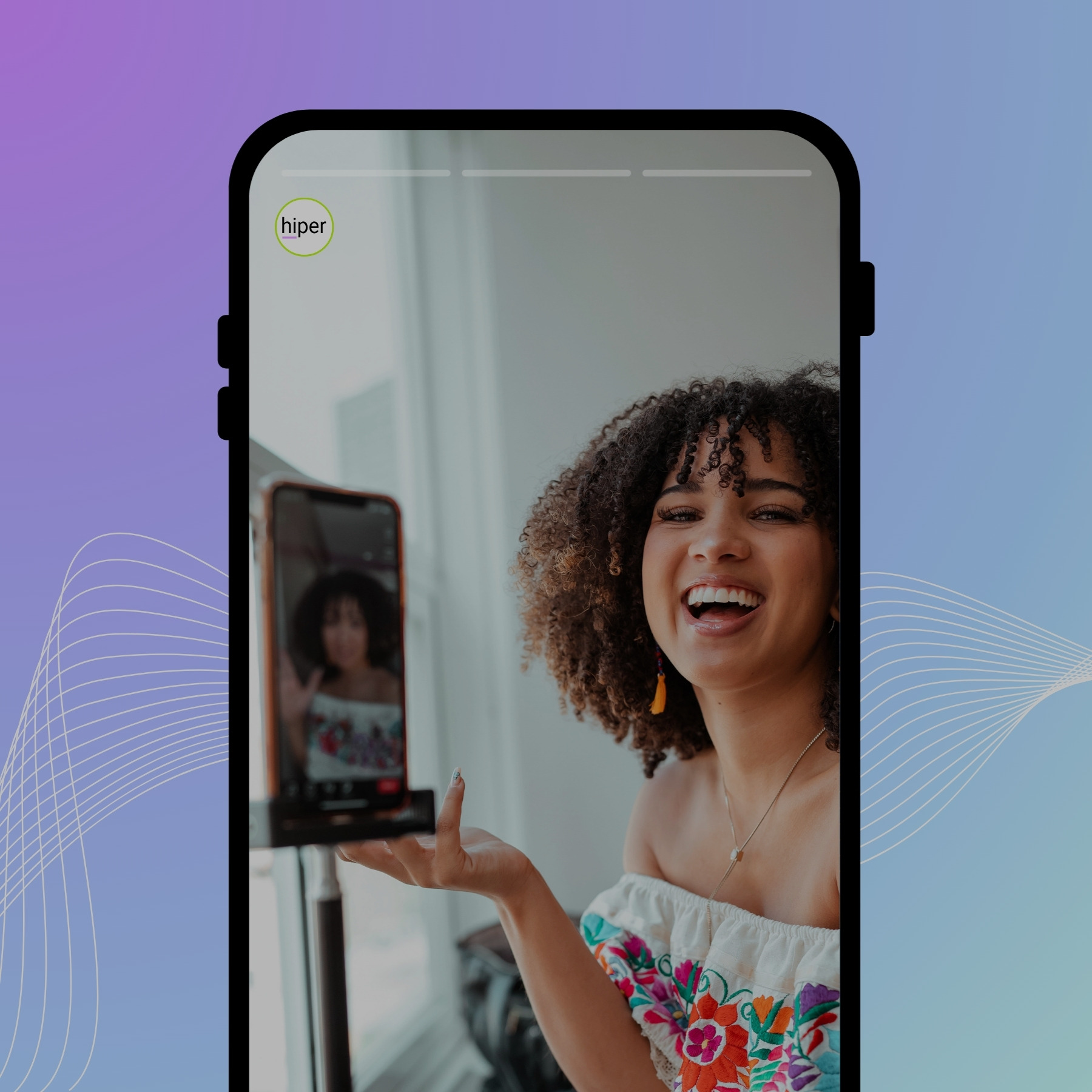
Credibility scales through creators. Amplify organic reach with paid influencer and UGC strategies that bridge high-reach campaigns and authentic engagement. Leverage creator credibility to drive higher performance while reducing production costs. Trust-driven content. Business-driven results.

FAQs
Local content at scale fails in one of two ways. Either the brand controls everything and local pages feel corporate and disconnected from the communities they serve. Or local teams post freely and the brand fragments across hundreds of pages that look and sound nothing like each other. Hiper was built to solve exactly that tension.
Our content system works in three layers simultaneously. Hiper creates and publishes brand-approved baseline content across every location automatically, using dynamic localization fields so each post reflects the specific market it's reaching without requiring manual customization for every location. On top of that, a template library gives local operators approved, on-brand frameworks they can access and adapt when they want to add something timely or community-specific. For moments that fall outside the templates, operators can submit custom post requests that our team designs, optimizes for each channel, and schedules on their behalf.
The result is a content engine that publishes thousands of posts per month across our client programs while maintaining engagement rates that consistently outperform industry benchmarks. Volume and quality aren't in tension when the system is built correctly. Local operators stay focused on running their business. Your brand stays consistent, relevant, and present in every market you serve.
A content calendar is only as strategic as the thinking behind it. For most brands, the calendar becomes a scheduling tool rather than a strategic one, filled with posts that react to the month ahead rather than driving toward business outcomes. The best content calendars work in the opposite direction, starting with what the brand needs to accomplish and building backward to what gets published, where, and when.
That means anchoring every calendar to business goals and key moments first. Product launches, seasonal campaigns, industry events, and local community moments all need to be mapped before a single post gets written. From there, content themes emerge from brand pillars and audience interests, not from whatever felt relevant that week.
For multi-location brands, this process has an additional layer of complexity that single-location thinking doesn't account for. A national content calendar needs to leave deliberate space for local relevance. Local operators need access to that calendar far enough in advance to layer in their own community moments, events, and neighborhood-specific content without scrambling at the last minute. The cadence, format mix, and platform strategy also need to account for what performs at the local level versus what drives national brand awareness, because those are genuinely different content jobs.
The operational infrastructure matters as much as the strategy. Multi-stakeholder approval workflows, role-based access, and publishing tools built for location-level customization are what allow a content calendar to actually function across a distributed team without becoming a bottleneck. A calendar that exists in a shared spreadsheet breaks down fast at scale. A calendar built into a centralized platform with built-in governance becomes a system that protects your brand while empowering every location to execute.
Brand content and local content serve different audiences, drive different outcomes, and require different creative approaches. Treating them as variations of the same thing is one of the most common reasons multi-location brands struggle to perform at the local level.
Brand content speaks from the organization as a whole. It lives on national channels and carries the weight of the brand's identity, voice, and strategic narrative. Campaign launches, mission-driven storytelling, product announcements, and thought leadership all belong here. The goal is awareness and authority at scale, reaching the broadest possible audience with a consistent message that builds long-term brand equity.
Local content operates at the community level and serves a fundamentally different purpose. It's what makes a customer in a specific neighborhood feel like your location belongs there. Store events, local partnerships, customer spotlights, community involvement, and neighborhood-specific moments all drive the authentic engagement that converts local discovery into real foot traffic and revenue. This content doesn't need to feel polished. It needs to feel real.
The challenge for multi-location brands is that these two content types need to work as a coordinated system, not as parallel workstreams managed in isolation. Brand content should establish the frameworks, messaging pillars, and visual guardrails that local content builds within. Local content should surface the authentic community stories that inform and enrich national storytelling. When that loop is working, brand and local content amplify each other. When it's broken, you get a national brand that feels irrelevant locally and local pages that feel disconnected from the brand customers thought they knew.
Posting frequency is one of the most debated questions in social media marketing, and most of the advice circulating online is either too generic to be useful or optimized for single-location brands with dedicated content teams. The honest answer is that consistency and quality matter far more than hitting an arbitrary number, but that doesn't mean frequency is irrelevant.
Platform behavior does create real guardrails. LinkedIn rewards consistent, thoughtful publishing over high volume. Instagram and Facebook respond to engagement quality more than daily posting, though maintaining a regular cadence of three to five times weekly keeps algorithms engaged. TikTok and YouTube Shorts do reward higher frequency, but only when content is genuinely built for the platform and % watch times remain strong. Posting daily with content that doesn't perform accelerates decline rather than growth.
For multi-location brands, the frequency question has a specific answer grounded in program data. 12 posts per location per month represents the baseline threshold for maintaining algorithmic visibility and consistent audience growth at the local level. Below that, platform algorithms deprioritize local pages in the feeds that matter most to nearby customers. Above it, the risk shifts to content quality, because volume without a production system behind it leads to rushed, generic posts that hurt engagement rates more than the extra frequency helps.
The real question for multi-location brands isn't how often to post. It's how to sustain quality at that volume across dozens or hundreds of locations simultaneously. That requires a content system, not just a content calendar. When the infrastructure is right, frequency stops being a burden and starts being a competitive advantage.
Short-form video is the highest-performing content format on every major social platform right now, and most brands are still producing it like it's a television commercial cut down to sixty seconds. That mismatch is exactly why so much brand video gets scrolled past without a second look.
What actually works starts in the first three seconds. Not a logo. Not a brand intro. Something that creates enough tension, curiosity, or visual surprise that stopping feels more compelling than scrolling. That opening moment is the entire game. Everything after it depends on earning it first.
From there, the content needs to deliver on whatever the hook promised, quickly and without padding. Captions and text overlays matter because most people watch without sound, particularly in public spaces or during the first passive scroll of the day. Platform-specific behavior shapes the rest: TikTok rewards trend participation and native audio, Instagram Reels prioritizes content that drives direct message shares, and YouTube Shorts favors watch time completion above almost everything else.
The insight that surprises most brand marketers is that production value is not the primary driver of performance. Authenticity consistently outperforms polish because audiences have developed sophisticated instincts for what feels genuine versus what feels like an ad. This is particularly important for multi-location brands, where the most powerful short-form video often comes from local operators, real staff, real customers, real community moments captured without a production crew. That content earns trust in ways that studio-produced brand video simply cannot replicate at the local level.
Building a short-form video strategy for multi-location brands means creating systems that capture authentic local content consistently, not just producing polished national content and hoping it resonates everywhere.
Most brands know what they do. The ones that build real loyalty know how to make people care about it. Brand storytelling is what closes that gap. It's not about what you sell. It's about why you exist, who you serve, and what your brand actually means to the communities where you operate. Done well, it turns content from information into connection.
For multi-location brands, storytelling carries a specific weight that single-location brands don't have to manage. Your brand needs to feel coherent and recognizable nationally while also feeling genuinely rooted in dozens or hundreds of different communities simultaneously. That's not a creative challenge. It's a structural one.
Without a deliberate storytelling framework, local content drifts and national content feels generic, and the brand that customers experience at the local level starts to feel disconnected from the brand they thought they knew.
Executive video coaching is structured training that helps business leaders communicate confidently and authentically on camera, so they can build thought leadership, represent their brand, and connect with audiences in the formats that platforms reward most right now.
It's for leaders who recognize that video is no longer optional for brand authority but haven't yet found a way to show up on camera that feels natural rather than performative. That includes CEOs building a LinkedIn presence, franchise leaders who want to speak directly to their operator community, marketing directors who need to appear in brand content, and any executive whose voice and credibility would strengthen the brand if it were more visible.
The barrier for most leaders isn't knowledge. It's comfort. Being genuinely good on camera requires a specific set of skills that have nothing to do with how articulate someone is in a boardroom. Pacing, eye contact, energy calibration, how to deliver a message without reading it, how to be conversational rather than scripted. These are learnable, and the leaders who invest in developing them consistently become some of the most valuable content assets a brand has.
For multi-location brands specifically, an executive who can speak directly and authentically to operators, franchisees, and local communities creates a human connection that no amount of polished brand content can manufacture. That authenticity, at scale, is genuinely rare and worth building.
This is the question most brands ask too late, after months of publishing without a clear connection between content activity and business outcomes. The answer starts with deciding upfront what "working" actually means for your specific goals, because content can serve very different purposes and each one requires different measurement.
At the awareness level, the right metrics are reach, impressions, follower growth, and share of voice in your category. At the engagement level, you're measuring engagement rate, saves, shares, comments, and watch time, signals that tell you whether content is resonating or just being seen. At the conversion level, you're connecting content activity to website traffic, appointment bookings, store visits, and revenue, which requires tracking infrastructure that most brands underinvest in.
For multi-location brands, measurement needs to work at two levels simultaneously. Aggregate performance tells leadership whether the program is working overall. Location-level performance tells operators whether their specific market is growing and gives your team the data to identify what's working in high-performing markets and replicate it elsewhere. Both matter. Neither is sufficient alone.
The honest truth about content measurement is that correlation is easier to establish than causation, and anyone who promises a direct line between a single post and a sale is oversimplifying. What strong measurement delivers is a clear trend line over time, confidence in where to invest more, and the ability to make creative and strategic decisions based on what actually performs rather than what feels right. That's the difference between a content strategy and a content system.