

Social media strategy
Social moves faster than most internal teams can keep up. That's exactly why we exist.

Built for algorithms. Designed for humans.
Social moves faster than most teams can keep up. AI curates feeds. Algorithms decide visibility. Attention is currency. We build strategies that work with these realities—connecting authentically while driving measurable growth.
We combine platform fluency, creative expertise, and performance data to win in AI-powered feeds and social search. From content strategy and governance to emerging platforms and paid amplification, we handle the spectrum—nationally and locally. You get a partner who knows where social is heading and builds for both today and tomorrow.
- Add a background color to the section div above ↑ this Timeline section. This is will help hide the progress line overflow.
- Add z-index-2 class to the section div above ↑ this Timeline section. This will ensure the oveflowing progress line from the Timeline section below ↓ is hidden underneath it.
Where smart strategy meets the future of social media.
Channel strategy
Define clear roles for brand and local channels across platforms. We architect your social ecosystem so every account serves a strategic purpose—whether driving national awareness, supporting local discovery, or building community. Every post has intent. Every platform has a plan. No redundancy. No confusion. Just a coordinated presence that amplifies your brand while empowering local relevance.
Messaging framework
Build repeatable systems that strengthen brand consistency while enabling local flexibility. We develop messaging architectures that scale—core narratives, content pillars, tone guidelines, and approved language that deepen audience connection across markets. Your brand voice stays recognizable while local teams adapt to their communities. Consistency without rigidity. Clarity at scale.
Social search optimization
Social platforms are search engines. We turn discovery signals into strategic content calendars built for how audiences actually find brands today—through rich captions, keywords, trending topics, and platform algorithms. Map audience demand to content that performs. Win visibility where discovery happens.
Governance systems
Protect brand integrity without slowing teams down. We implement role-based access, approval workflows, and content guardrails that give leadership visibility and control while empowering local execution. Clear permissions. Streamlined approvals. Brand safety at every touchpoint. Scale with confidence, not chaos.
Crisis management
When negative sentiment surfaces on social or review sites, we're ready. We monitor channels continuously, identify issues before they escalate, and deploy coordinated responses across all locations. Consistent messaging. Fast turnaround. Brand-aligned tone—whether addressing a viral complaint or managing review bombs. Your reputation stays protected across every platform and every market.

Multi-location marketing is where scale meets community. Hiper turns fragmented local efforts into unified systems that protect your brand while driving performance in every market you serve.
From 2 locations to 200+, we help brands show up authentically in local communities while delivering results that matter most.
Client case study |
National nonprofit local marketing
Local market publishing
Increase in local market social media publishing through preset templates and custom post requests.
Local engagement rate
2025 local Facebook engagement rate, far surpassing industry benchmarks of 2-3%.
Local content approvals
Post-program implementation, 100% of local content is moderated before publishing to ensure brand governance.
.png)
See how 34 local markets drive impact
We've spent a decade perfecting multi-location marketing operations for organizations like March of Dimes. Our system works. The results speak for themselves.
One brand. Many markets. Total control. Hiper unifies strategy and execution across national and local channels, giving brand leaders command of the narrative while empowering each location with proven playbooks that drive measurable results.

Social platforms are where your customers build community. We build platform-specific strategies that connect discovery to results across every channel. Our systems streamline stakeholder collaboration, content planning, and approvals—so your teams move faster, stay aligned, and perform better.

Content that feels native. Performs everywhere. We create platform-optimized content for Meta, YouTube, TikTok, LinkedIn, and Google—built on search insights, trend intelligence, and repeatable production systems. Your brand shows up authentic, on-message, and ready to convert across every touchpoint.
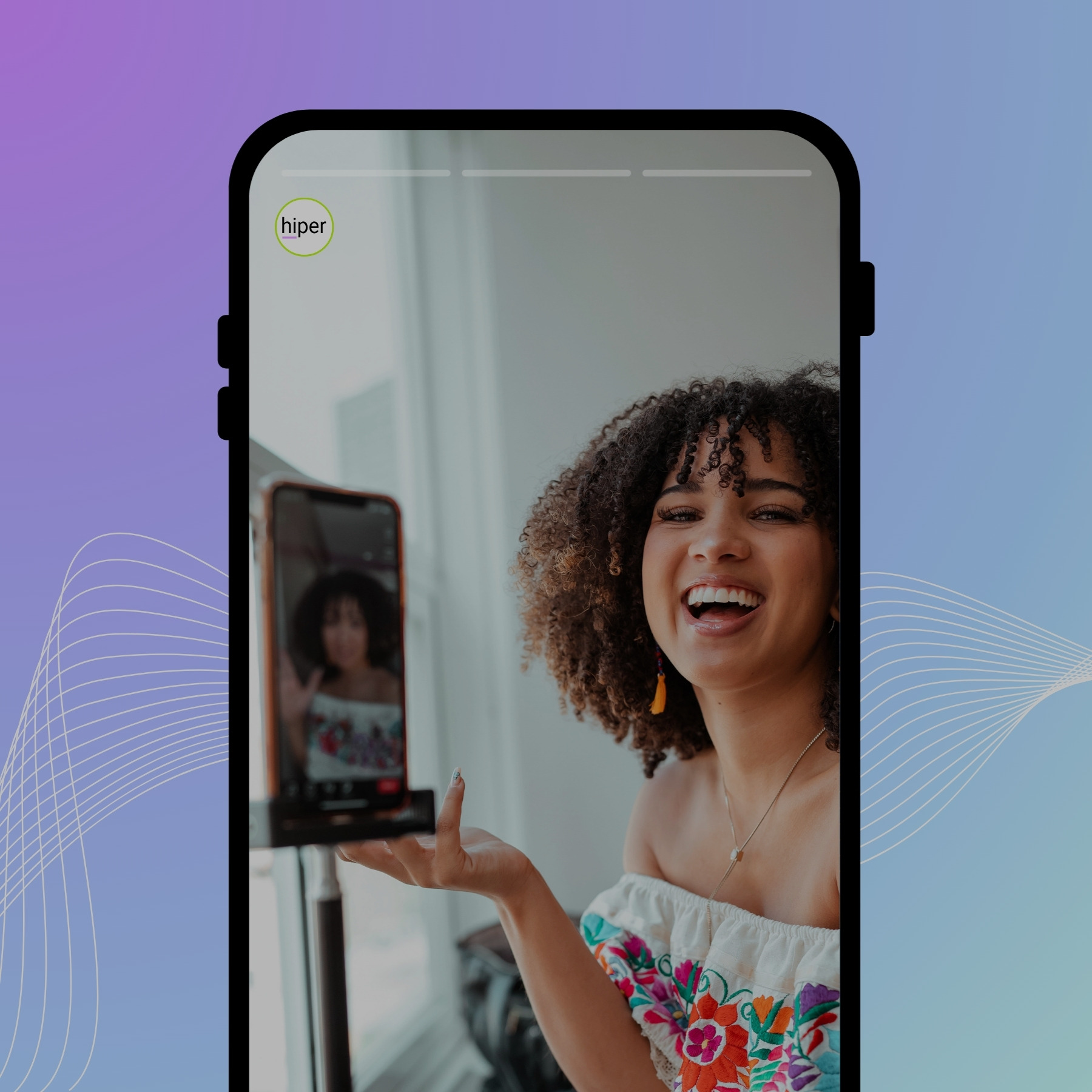
Credibility scales through creators. Amplify organic reach with paid influencer and UGC strategies that bridge high-reach campaigns and authentic engagement. Leverage creator credibility to drive higher performance while reducing production costs. Trust-driven content. Business-driven results.

FAQs
A social media strategy is only as strong as the clarity underneath it. Without that foundation, even the best content gets lost in fragmented execution, inconsistent messaging, and platforms that work against each other instead of together.
A strategy worth building starts with an honest audit of where your brand actually stands, across both national and local channels, identifying the gaps between what you intend to communicate and what audiences are actually experiencing. From there, it defines clear roles for every platform and every account, so nothing overlaps, nothing gets neglected, and every post serves a deliberate purpose.
The strongest strategies also build messaging frameworks that travel. Core narratives and content pillars that stay consistent nationally while giving local teams enough flexibility to speak to their specific communities. Governance systems, including approval workflows and role-based access, protect that consistency without turning your marketing team into a bottleneck for every piece of content.
Social search optimization is increasingly non-negotiable. Platforms like Instagram, TikTok, and Facebook function as search engines, and content that isn't built for discovery leaves visibility on the table. Finally, the right KPIs connect social activity to actual business outcomes, so you're measuring what matters, not just what's easy to track.
AI has fundamentally changed what it means to win on social media, and most brands are still playing by rules that no longer apply. Algorithms no longer simply reward posting frequency or follower count. They evaluate content quality through engagement signals, specifically saves, shares, watch time, and comments, and they determine visibility based on relevance to each individual user's behavior patterns.
That means two brands posting the same content to the same platform at the same time can see wildly different results depending on how well their content is built for the signals the algorithm is actually measuring.
For multi-location brands, this creates a specific challenge. National content optimized for brand awareness doesn't always perform at the local level, where algorithms are also factoring in geographic relevance and community engagement patterns. Local pages that go quiet, or that post generic branded content without authentic community signals, get deprioritized in feeds that matter most to local customers.
AI has also transformed social into a search engine. Captions, keywords, alt text, and profile completeness now directly influence whether your locations surface in discovery features across Instagram, TikTok, Facebook, and LinkedIn. A social strategy that ignores this is leaving organic visibility on the table in exactly the places where local purchase decisions get made.
Building for AI-powered feeds means understanding what each platform rewards, creating content that earns the right signals, and maintaining the local presence that keeps algorithms working in your favor across every market you serve.
Brand social and local social serve fundamentally different purposes, and confusing the two is one of the most common and costly mistakes multi-location brands make.
Brand social operates at the national level. Corporate accounts build awareness, establish authority, and communicate the brand's identity, values, and voice to a broad audience. The content is polished, strategically timed, and built to reinforce consistency across every market. It's where the brand speaks as one.
Local social operates at the community level. Individual location pages drive discovery in specific neighborhoods, build relationships with local customers, promote location-specific events and offers, and engage authentically with the people most likely to walk through the door. The content that performs here feels human and relevant, not corporate. Customers in Austin don't need to see what's happening in Boston.
The challenge for multi-location brands is that these two strategies have to work together without creating chaos. When brand and local channels operate in silos, you get fragmentation: inconsistent messaging, rogue posts, and locations that either go dark or go off-brand. When they're too rigidly controlled from the center, local pages lose the authenticity that makes them worth following in the first place.
The answer is a coordinated architecture where brand channels set the tone and local channels execute within it, each one serving a clear purpose, with governance systems that keep both moving in the same direction.
The way people find local businesses has changed, and most brands haven't caught up yet. Consumers, particularly younger ones, are increasingly bypassing Google entirely and searching directly on Instagram, TikTok, and YouTube when they want to discover a restaurant, salon, fitness studio, or local service.
Social platforms have become search engines, and the brands that understand this are capturing discovery that their competitors are invisible to.
Social search optimization is the practice of building content and profiles that perform in these platform-native search environments. That means writing captions with intentional keywords, not just hashtags. It means geo-tagging content to signal local relevance. It means maintaining complete, accurate, and active profiles because the algorithm surfaces accounts that look like real, engaged businesses. And it means creating content that earns the engagement signals, saves, shares, comments, that platforms interpret as relevance signals for search ranking.
For multi-location brands this creates both a significant opportunity and a meaningful operational challenge. Each location has its own social presence, which means each one needs its own social search strategy tuned to its specific community and market. A location with a dormant profile, thin captions, and no geo-context gets outranked by a competitor who understood this shift earlier.
The brands winning local discovery right now aren't just posting more. They're posting smarter, with content built for how their customers actually search.
The brands that do this well don't rely on local teams to figure it out themselves. They build centralized systems that handle the heavy lifting at scale, then give local operators controlled access to execute within approved guardrails.
In practice, that means a centralized platform where brand-approved content is created, localized through dynamic fields, and published across every location automatically.
Local operators get role-based access so they can customize, request custom posts, or engage their community without the ability to go off-brand.
Content governance happens at the system level, not through manual review of every post.
The result is a consistent brand presence across every market without requiring a dedicated social media manager at each location. National strategy sets the direction. The system handles distribution. Local teams stay focused on running the business.
This is the central challenge of multi-location social media, and most brands solve it by defaulting too far in one direction. Either everything flows from a tightly controlled national account that feels disconnected from local communities, or local teams are left to figure it out independently and the brand fragments across hundreds of pages that look and sound nothing like each other.
The answer is a layered architecture, not a compromise. At the national level, the strategy establishes the brand's voice, content pillars, visual identity, and editorial calendar. These aren't suggestions for local teams; they're the foundation everything else builds on. At the local level, the strategy defines how operators can adapt within that foundation, which elements are fixed, which are flexible, and where local creativity is not just allowed but encouraged.
The practical infrastructure that makes this work includes dynamic content localization, so brand-approved posts automatically reflect each location's specific market. It includes template libraries that give operators approved flexibility without creative chaos. And it includes governance systems that keep both layers coordinated without requiring a manual approval process for every piece of content.
When this architecture is built correctly, national and local socials don't compete. They amplify each other.
This is a question most brands either overthink or underfund, and the answer is more specific than most people expect.
For local location pages, the research and our own program data consistently point to a baseline of 12 posts per month per location as the threshold for maintaining algorithmic visibility and audience growth. Below that, platforms deprioritize your pages in local feeds. Above it, you risk content quality dropping in pursuit of volume, which actually hurts engagement rates more than posting frequency helps them.
At the national brand level, cadence depends on the platform. LinkedIn rewards consistency over volume. Instagram and Facebook reward quality and engagement signals more than daily posting. TikTok and YouTube Shorts reward watch time. The more important question for multi-location brands isn't how much to publish, it's how to sustain quality at that volume across dozens or hundreds of locations simultaneously.
That requires a content production system, not just a content calendar. Baseline posts that localize automatically, template libraries for operator-driven content, and a team managing custom requests all work together to hit the cadence without sacrificing what actually drives results: content that feels relevant to the specific community seeing it.
Brand voice at scale is a systems problem, not a creative one. Most brands approach it as the latter, writing a tone guide, sharing it once, and hoping local teams read it. Many don't. And even when they do, interpretation varies enough across dozens of operators that consistency erodes quickly.
The brands that maintain a recognizable voice across every location treat voice as infrastructure. That means approved messaging frameworks that give local teams the language they need without requiring them to start from scratch. It means content templates that are already written in the brand's voice, so operators are working within it rather than around it. And it means moderation workflows that review locally generated content before it publishes, catching tone inconsistencies before they reach customers.It also means being honest about what "consistent" actually requires.
Voice doesn't mean identical. A location in Miami and a location in Minneapolis should feel like they belong to the same brand while speaking naturally to their own communities. The voice is the constant. The cultural context is the variable. Building that distinction into your content system is what separates brands that feel authentically local from brands that feel like corporate copy-paste at every location.