

Influencer and UGC marketing
Turn customers and creators into your content engine. Authentic voices that build trust, drive discovery, and convert across every market.

Where internet culture meets brand performance.
Audiences trust people, not ads. Influencer partnerships and user-generated content deliver the authenticity that breaks through—building credibility, driving discovery, and converting at rates branded content can't match.
We architect creator programs that scale nationally while activating local voices in every market. From micro-influencers to customer advocacy, we identify the right partners, negotiate terms, manage relationships, and amplify what performs. You get authentic content at volume, reduced production costs, and performance that proves ROI across organic and paid channels.
- Add a background color to the section div above ↑ this Timeline section. This is will help hide the progress line overflow.
- Add z-index-2 class to the section div above ↑ this Timeline section. This will ensure the oveflowing progress line from the Timeline section below ↓ is hidden underneath it.
Authentic voices. Measurable impact.
Creator partnerships
We identify and activate influencers who authentically align with your brand and resonate with your audience. Vetted partnerships based on engagement quality, not just follower count. Managed relationships from outreach through content approval and performance tracking. Collaborations that feel organic, not transactional—because audiences can tell the difference. Content that drives awareness, consideration, and conversion across every market you serve.
User generated content
Your customers tell better stories than your brand ever could. We build systems that capture, curate, and activate user-generated content at scale—turning customer experiences into social proof that builds trust faster than any polished ad. From mining tagged content to social listening to direct customer outreach, we source authentic content that resonates. Rights management handled. Brand safety maintained. Real voices that drive real results.
Paid amplification
Great organic content deserves more reach. We identify your best-performing creator and UGC content, then strategically amplify it through paid social to expand impact. Proven creative backed by targeted distribution. Lower production costs. Higher engagement rates. Better ROI than traditional branded ads. Scale what's already working to reach the audiences that matter most.
Hyperlocal campaigns
Multi-location brands need local relevance at scale. We activate neighborhood-level creators and community voices who speak authentically to specific markets. Precision-targeted campaigns for cities, regions, and communities with cultural fluency. Local creators. Local stories. Local impact. National coordination that maintains brand consistency while celebrating what makes each market unique.

Authentic content. Amplified reach.
Measurable growth.
Creator and UGC partnerships deliver the trust your audience craves with the scale your business demands. We handle strategy, activation, and amplification—so you get performance without the operational complexity.
One brand. Many markets. Total control. Hiper unifies strategy and execution across national and local channels, giving brand leaders command of the narrative while empowering each location with proven playbooks that drive measurable results.

Social platforms are where your customers build community. We build platform-specific strategies that connect discovery to results across every channel. Our systems streamline stakeholder collaboration, content planning, and approvals—so your teams move faster, stay aligned, and perform better.

Content that feels native. Performs everywhere. We create platform-optimized content for Meta, YouTube, TikTok, LinkedIn, and Google—built on search insights, trend intelligence, and repeatable production systems. Your brand shows up authentic, on-message, and ready to convert across every touchpoint.
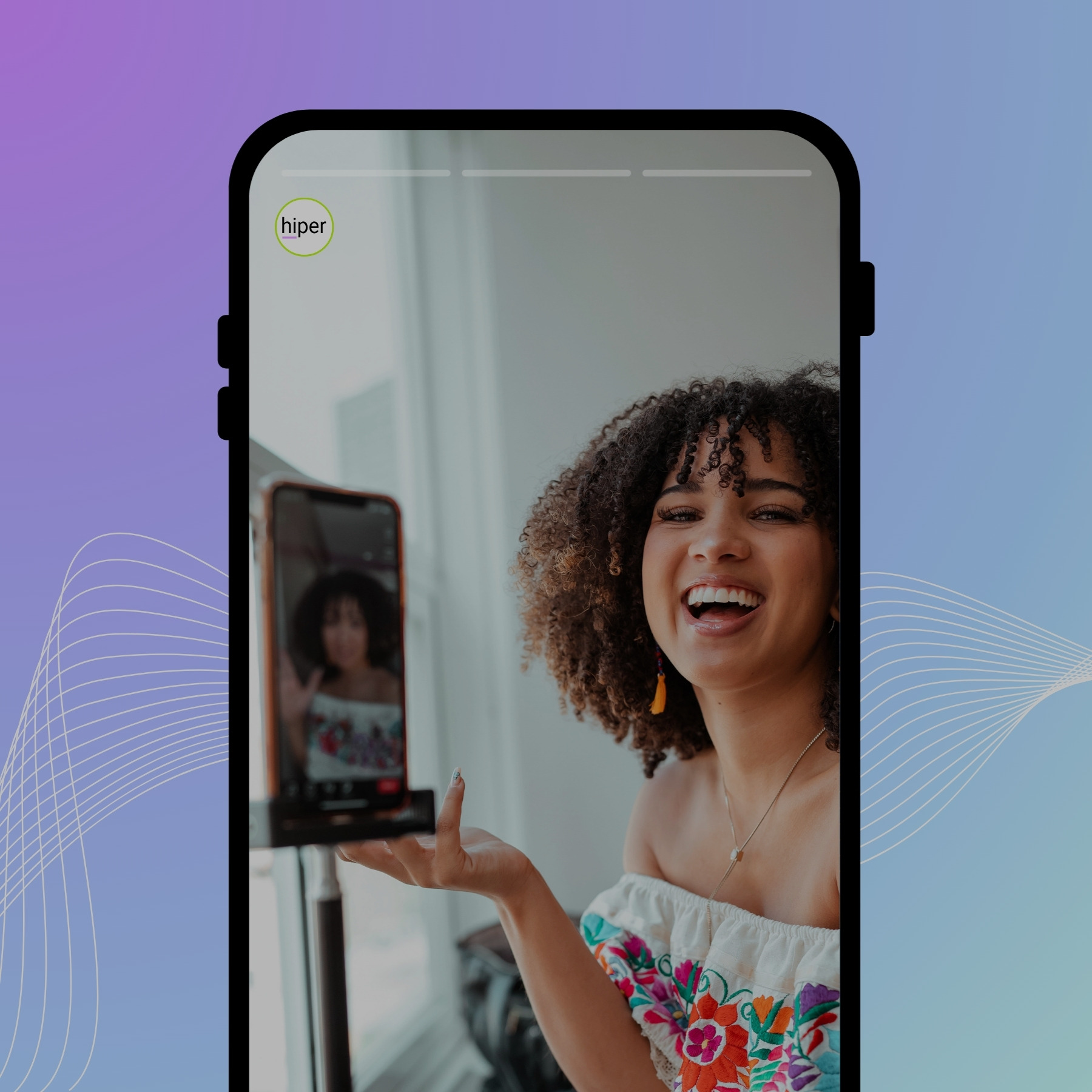
Credibility scales through creators. Amplify organic reach with paid influencer and UGC strategies that bridge high-reach campaigns and authentic engagement. Leverage creator credibility to drive higher performance while reducing production costs. Trust-driven content. Business-driven results.

FAQs
People have developed finely tuned instincts for what's real and what's manufactured. Branded content, no matter how well produced, carries an inherent credibility gap because audiences know the brand paid for it.
User-generated content closes that gap entirely because it comes from real customers with no obvious commercial agenda, and that authenticity is something no production budget can replicate.
The performance data reflects this consistently. UGC typically generates four to five times higher click-through rates than traditional branded creative and converts at meaningfully stronger rates across paid and organic channels.
Algorithms amplify the effect because engagement on authentic content tends to be qualitatively different, more comments, more saves, more shares, which platforms interpret as relevance signals and reward with greater distribution.
Influencer marketing costs are genuinely difficult to benchmark because rates vary significantly across platforms, content formats, creator niches, usage rights, and campaign scope. Anyone offering you a clean price list without those qualifiers is oversimplifying a market that doesn't work that way.
That said, creator tiers do provide a useful orientation. Nano-influencers with audiences between 1K-10K followers typically represent the most accessible entry point, often ranging from a few hundred to a couple thousand dollars per piece of content, depending on platform and format. Micro-influencers in the 10K-100K range command meaningfully more, particularly on Instagram and TikTok where engagement rates in this tier consistently outperform larger accounts. Mid-tier and macro creators scale from there, with fees that can reach tens of thousands per post when usage rights, exclusivity, and paid amplification are factored in.
What most brands underestimate is that the creator fee is only part of the investment. Usage rights, campaign management, relationship building, content review, and performance tracking all carry real operational weight. Managing these details without deep influencer marketing expertise leads to costly mistakes, missed negotiations, and content that doesn't perform to its potential. Hiper manages the full program on your behalf, so your team stays focused on strategy while we handle the complexity.
One practice Hiper builds into every influencer program is allocating 20% of the total budget to paid media amplification. Organic reach on social platforms is never guaranteed, and relying on algorithms alone to deliver your best creator content to the right audience is a risk that's easy to eliminate. Paid amplification within priority channels ensures a defined level of reach and engagement to your target audience, making every creator investment work harder and perform more predictably.
For multi-location brands, the more relevant question is how to structure a creator program that delivers authentic local voices across multiple markets without cost and complexity multiplying by location count. Micro and nano creators in specific markets often deliver stronger local relevance and engagement than larger national creators, at a fraction of the cost, and UGC activation programs that capture organic customer content sidestep creator fees altogether while building a sustainable content pipeline that scales across every location you serve.
Influencer marketing and UGC are frequently grouped together because both involve real people rather than polished brand creative. But they work through different mechanisms, serve different purposes in the customer journey, and require very different operational approaches to execute well.
Influencer marketing is a paid partnership. You're investing in a creator's established audience, their reach, their credibility, and the trust their community has built with them over time. The content is commissioned, strategically planned, and designed to introduce your brand to people who don't yet know it. Done well, influencer marketing drives awareness and consideration at scale in ways that traditional advertising struggles to match because the message comes through a voice the audience already chose to follow.
UGC is earned. It originates from real customers sharing genuine experiences with your brand through reviews, social posts, photos, and testimonials, without being asked or paid to do so. That absence of commercial arrangement is precisely what makes it powerful. When a brand activates UGC by curating, obtaining rights to, and amplifying that organic content, it turns authentic customer voices into social proof that converts at rates commissioned content rarely achieves.
The strongest programs use both in deliberate combination. Influencer partnerships build the top of the funnel, putting your brand in front of new audiences with credible, engaging content. UGC closes the loop at the bottom, giving people who are already considering your brand the real-world proof they need to make a decision.
For multi-location brands, this combination has a specific strategic value. Local influencers with deep roots in specific markets can build authentic relevance in communities that national campaigns never reach. Customer UGC from those same markets provides the hyper-local social proof that turns local discovery into local loyalty. Together, they create a content ecosystem that works at every level of your footprint simultaneously.
The biggest mistake brands make when starting an influencer program is optimizing for the wrong thing. Follower count is visible, easy to compare, and almost entirely the wrong measure of whether a creator will drive results for your brand.
The right starting point is audience alignment. A creator with fifty thousand highly engaged followers whose audience mirrors your target customer will consistently outperform a creator with five hundred thousand passive followers who happened to go viral once. Engagement rate, the quality of comments, the authenticity of the creator's existing brand partnerships, and the genuine fit between their content and your brand values matter far more than reach alone.
Vetting goes deeper than surface metrics. Follower fraud, artificially inflated engagement, and brand safety risks are real and increasingly sophisticated. Identifying them requires purpose-built discovery platforms and experienced eyes that know what patterns to look for, not just a spreadsheet of engagement percentages.
For multi-location brands, the creator search has an additional dimension that national brands don't face. Local and regional creators with genuine community credibility in your specific markets often deliver results that national influencers simply cannot, because their audiences are the actual neighbors, customers, and community members your locations serve every day. A micro-influencer in Nashville who is genuinely trusted by their local following is worth more to your Nashville location than a macro-influencer with national reach who has never set foot there.
The final consideration is relationship management. Finding the right creators is only the beginning. Briefing them effectively, negotiating usage rights, reviewing content, tracking performance, and scaling what works across multiple markets requires an operational infrastructure that most brand marketing teams aren't built to run alongside everything else they're managing. That's where having a dedicated partner changes what's possible.
Organic reach on social platforms is no longer something brands can rely on. Algorithms decide what gets seen, by whom, and how often, and even the best-performing creator content can underdeliver on reach when the algorithm doesn't distribute it the way you'd expect. Paid amplification removes that uncertainty.
When you take influencer or top-performing UGC content that has already demonstrated organic engagement and put paid media behind it, you're doing something fundamentally different from running a traditional ad. You're taking content that real people have already responded to, content that feels authentic because it is, and ensuring it reaches a precisely defined audience at a scale that organic distribution alone rarely achieves. The creative has already proven itself. Paid amplification is how you make that proof work harder.
The performance difference is meaningful. Influencer and UGC content amplified through paid channels consistently outperforms traditional branded creative in click-through rates and conversion because the authenticity that makes it perform organically doesn't disappear when it's boosted. Audiences respond to it the same way regardless of whether the distribution was organic or paid.
Hiper builds a 20% paid amplification allocation into every influencer and UGC program for exactly this reason. Creator fees represent a real investment, and leaving the return on that investment entirely at the mercy of platform algorithms is an unnecessary risk. Paid amplification within priority channels guarantees a defined level of reach to your target audience, making every dollar spent on content creation perform more predictably and more completely across every market you serve.
Most digital campaigns are built to reach the broadest possible audience. Hyperlocal campaigns are built to do the opposite: reach exactly the right people in exactly the right market with messaging that feels like it was made specifically for them. For multi-location brands, that precision is often the difference between marketing that drives national awareness and marketing that drives local results.
A hyperlocal campaign uses location-specific signals, local attributes, community context, and market-level targeting to support individual locations with creative and messaging that reflects their specific geography and audience. That might mean a Google campaign targeting users within a defined radius of a specific location. It might mean Meta or TikTok campaigns using geographic and behavioral targeting to reach the precise community a location serves. It might include local influencer activations from creators with authentic credibility in that market. In most cases, it's a combination of all of these, coordinated around a single location's goals.
What makes this approach powerful for multi-location brands is that it can be executed at scale without losing the local relevance that makes it work in the first place. Each location gets campaigns that feel genuinely local because they are, built on real signals from that market, using messaging and creative that speak to that specific community. National coordination ensures brand consistency, budget efficiency, and aggregate performance visibility across the entire footprint.
The operational challenge is significant. Running truly hyperlocal campaigns across dozens or hundreds of locations simultaneously requires specialized infrastructure, location-level strategy, and a team experienced in managing distributed campaign complexity without letting quality slip. When that infrastructure exists, hyperlocal campaigns become one of the most efficient growth levers available to a multi-location brand.
Measuring influencer marketing ROI is genuinely more complex than measuring most digital channels, and brands that approach it with the same framework they use for paid search or email are going to draw the wrong conclusions. That complexity is worth understanding before it becomes a reason to underinvest in a channel that consistently delivers. The measurement framework needs to match the goal. Awareness campaigns are measured through reach, impressions, share of voice, and brand sentiment shifts. Consideration campaigns are measured through engagement rate, saves, profile visits, and website traffic driven by creator content. Conversion campaigns are measured through tracked link clicks, promo code redemptions, appointment bookings, and in-store attribution where available. These are different jobs and conflating them produces data that doesn't tell you anything useful.
For influencer content that gets amplified through paid media, measurement becomes more straightforward because paid channels provide the tracking infrastructure that organic posts lack. This is one of the practical reasons Hiper builds paid amplification into every program. It makes performance more measurable, not just more visible.
For multi-location brands, measurement needs an additional geographic layer. Performance should be tracked by market so high-performing creator partnerships in specific regions can be identified and scaled, while underperforming markets can be diagnosed and adjusted. Aggregate program performance tells leadership whether the investment is working overall. Location-level data tells the team where to optimize next.
The brands that get the most out of influencer marketing treat it as a long-term brand-building channel with measurable short-term performance signals, not a campaign tactic evaluated on a single post's conversion rate. That perspective, combined with the right tracking infrastructure, is what turns influencer marketing from a line item that's hard to justify into one that's hard to cut.