


Marketing services for multi-location brands
One brand. Every location. Total control.
.jpg)
.jpg)
The gap between your brand strategy and local results is costing you both.
National builds the playbook. Local owns the relationships. The distance between them creates fragmentation, compliance risk, and missed impact. You need a team that operates the platforms, systems, and enables your operators to be their best.
Hiper closes the gap.
We run your multi-location marketing operations: social media publishing and community management, local search optimization, review response, and field enablement. Your brand gets centralized governance and visibility. Your operators get execution support and modern tools without platform overwhelm. The gap disappears.
.png)
Protect your brand while empowering every location
The foundation for control and scale:

Local social media that stays on-brand
We publish baseline content across every location using dynamic localization. We create template libraries for operators who want flexibility. We fulfill custom requests that align with guidelines. The result is consistent brand presence with authentic community connection, scaled across dozens or hundreds of pages without sacrificing either.
.jpg)
Review management that protects the brand and scales
AI-assisted response systems let us reply fast while maintaining your voice. Every reply is reviewed by our team before publishing. Escalation protocols handle sensitive issues. Sentiment analysis surfaces trends by market. Operators stay focused on operations. Your reputation stays intact.
.jpg)
.jpg)

Search visibility that doesn't require local expertise
We optimize every Google Business Profile, syndicate accurate listings to 140+ networks, and monitor health across your footprint using AI-powered recommendations from platforms built for multi-location brands. Operators don't become SEO experts. They stay focused on running the business. Your locations stay discoverable where customers actually search.
Field marketing support that drives adoption
We work directly with your operators through help desk support, live webinars, verification assistance, and content enablement. When local teams have questions, they reach our team, not your already-stretched marketing department. Adoption goes up. Your internal capacity stays protected.
Local operators who feel supported perform better.
You maintain brand integrity across every digital touchpoint. Operators get the support and tools they need to compete locally. Performance data flows into one dashboard connecting social, search, and reputation to business outcomes. National strategy reaches local execution without the gap.
Results that prove this system works
Annual impressions
Local chapter Facebook and LinkedIn content delivered 3.6 million impressions, generated from 88K local posts across 200+ locations. Brand presence at scale.
Engagement rate
Average engagement rate for local Facebook and LinkedIn posts, far exceeding industry benchmarks of 2-3%. Quality and consistency at every chapter.
Local engagement growth
Increase in local engagement after shifting to client impact storytelling. Strategic content optimization that operators could execute and audiences wanted.
.png)
200+ locations unified. Your brand could be next.
We've spent a decade perfecting multi-location marketing operations for organizations like SCORE. Our system works. The results speak for themselves.
One brand. Many markets. Total control. Hiper unifies strategy and execution across national and local channels, giving brand leaders command of the narrative while empowering each location with proven playbooks that drive measurable results.

Social platforms are where your customers build community. We build platform-specific strategies that connect discovery to results across every channel. Our systems streamline stakeholder collaboration, content planning, and approvals—so your teams move faster, stay aligned, and perform better.

Content that feels native. Performs everywhere. We create platform-optimized content for Meta, YouTube, TikTok, LinkedIn, and Google—built on search insights, trend intelligence, and repeatable production systems. Your brand shows up authentic, on-message, and ready to convert across every touchpoint.
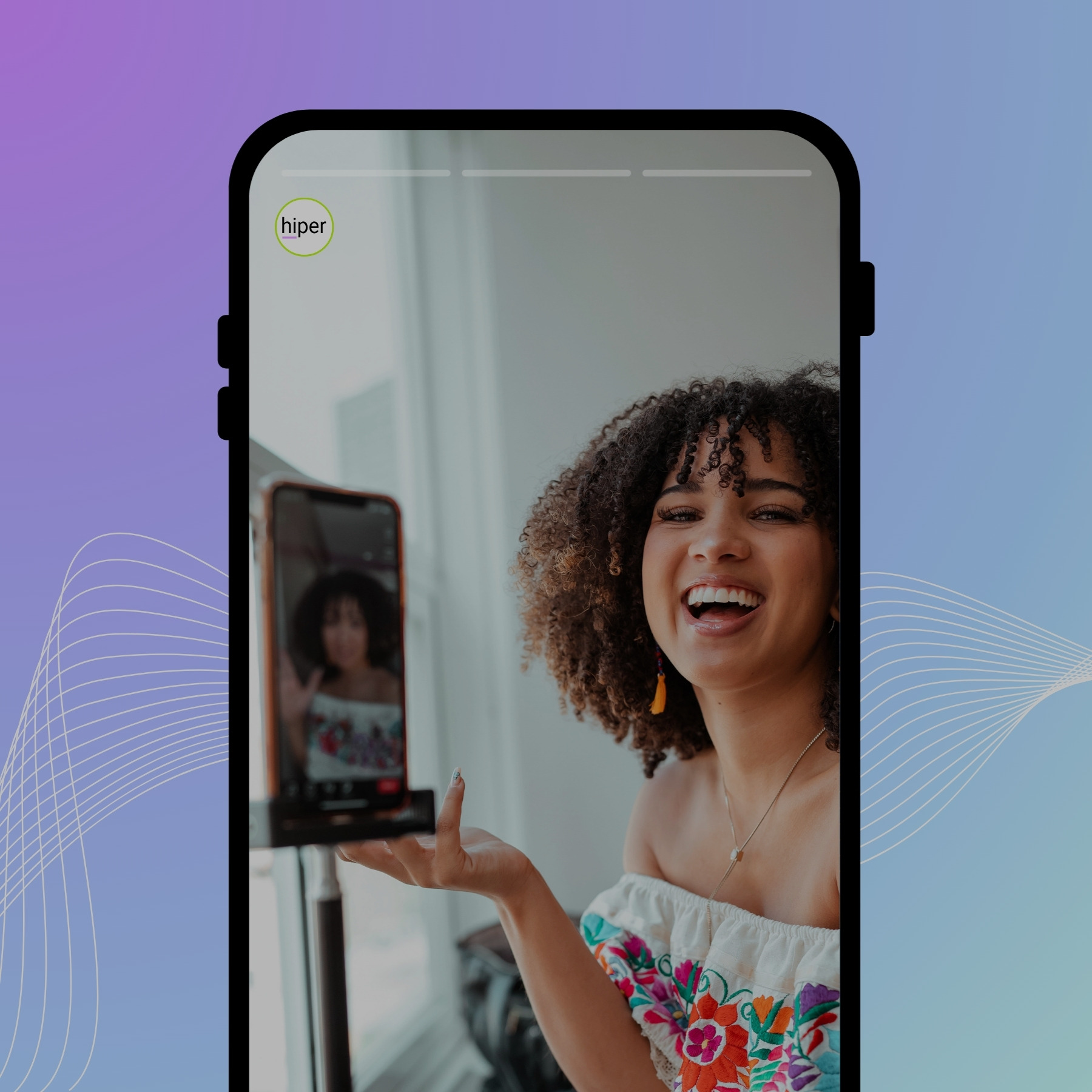
Credibility scales through creators. Amplify organic reach with paid influencer and UGC strategies that bridge high-reach campaigns and authentic engagement. Leverage creator credibility to drive higher performance while reducing production costs. Trust-driven content. Business-driven results.

FAQs
Multi-location marketing is the practice of managing your brand's digital presence across every location you operate, while making sure each one shows up consistently, accurately, and relevantly in its local market.
At the national level, that means building the systems, content, and governance that protect your brand at scale.
At the local level, it means giving operators the tools and support to engage their communities authentically without going off-brand or off-strategy.
The tension between those two things is where most brands struggle. Done well, multi-location marketing closes the gap between what leadership builds and what customers actually experience at the local level. It connects social media, local search, review management, and content into one coordinated system, so your brand performs in markets you're physically in and digitally present across.
The brands that do this well don't rely on local teams to figure it out themselves. They build centralized systems that handle the heavy lifting at scale, then give local operators controlled access to execute within approved guardrails.
In practice, that means a centralized platform where brand-approved content is created, localized through dynamic fields, and published across every location automatically.
Local operators get role-based access so they can customize, request custom posts, or engage their community without the ability to go off-brand.
Content governance happens at the system level, not through manual review of every post.
The result is a consistent brand presence across every market without requiring a dedicated social media manager at each location. National strategy sets the direction. The system handles distribution. Local teams stay focused on running the business.
Brand control at scale comes from building the right system upfront, not from chasing down inconsistent posts after the fact. The most effective approach layers three things together.
First, a central team publishes brand-approved baseline content across every location automatically, using dynamic localization fields to make each post relevant to its specific market.
Second, a template library gives local operators the ability to post on their own, within guardrails that keep everything on-brand without requiring approval for every piece of content.
Third, moderation workflows ensure that anything outside those guardrails gets reviewed before it goes live.
The result is a system where local operators feel empowered and supported, not restricted, and brand leaders have visibility and control without becoming a bottleneck. Consistency stops being a manual effort. It becomes structural.
Local search optimization for multi-location brands is fundamentally different from single-location SEO, and most brands underestimate that gap until they see how inconsistent their footprint actually is.
Every location needs its own optimized Google Business Profile with accurate information, keyword-informed descriptions, relevant photos, and proper category alignment. That profile then needs to be syndicated accurately across 140+ directories and networks, because inconsistent listings data across the web directly undermines local search visibility. One wrong address or phone number, replicated across dozens of directories, quietly costs you ranking and customer trust.
At scale, this requires a platform built for multi-location complexity, AI-powered recommendations that surface optimization opportunities by location, and an expert team actively managing health monitoring, updates, and verification support. Operators shouldn't need to become local SEO experts. The system should handle it while they stay focused on running their business.
This is the question most brands don't ask until they've already launched a program that nobody uses. Adoption doesn't happen because the platform is good. It happens because operators feel supported, not overwhelmed.
The brands with the highest adoption rates share a few things in common. They reduce friction at every step, meaning operators can access approved content, request custom posts, and get answers without navigating complex platforms or waiting days for a response. They demonstrate value early and consistently, so operators see results tied to their own location before they're asked to invest more time. And they have a human layer, through help desk support, live webinars, and regular performance touchpoints, that makes operators feel like someone is genuinely in their corner.
A program that operators trust becomes one they champion. That word-of-mouth adoption across a franchise system is worth more than any rollout email.
The better question is what combination of tools and expertise franchise brands actually need, because the platforms alone rarely solve the problem. Most franchise brands need centralized social media management, local search and listings software, review monitoring tools, and content systems built to operate at scale.
These platforms exist, and they're good. But the execution gap isn't a technology problem. It's an operations problem. Who is actually running these platforms? Who is creating location-specific content, optimizing each Google Business Profile, managing review responses, and supporting franchisees when something breaks?
The brands that get local marketing right pair enterprise-grade tools with an expert team that operates them. Technology handles the scale. People handle the judgment calls. That combination delivers what platforms alone cannot: consistent performance across every location, without overwhelming your internal team or your franchisees.
Measurement is where most multi-location marketing programs fall short. Brands end up with scattered data across platforms, disconnected from the business outcomes that leadership actually cares about.
Effective measurement connects digital activity to real results by location. That means social engagement and audience growth at the local level, search visibility and listing health scores across every market, review ratings and response time benchmarks, and where possible, correlation to store visits, appointment bookings, and revenue. These signals should live in one unified dashboard, not spread across four different platform logins.
Reporting also needs to work at two levels simultaneously. Local operators need to see how their specific location is performing so they stay engaged with the program. Leadership needs aggregate visibility across the entire footprint with clear trend lines and optimization recommendations. When both audiences get what they need, marketing accountability stops being a conversation and starts being a competitive advantage.
Building this capability in-house sounds straightforward until you account for everything it actually requires: platform licensing across social, search, and reputation tools, a team with deep multi-location expertise, content production systems built for localization at scale, help desk infrastructure for local operators, and the ongoing management that keeps all of it performing. Most marketing teams are already stretched. Adding multi-location operations to an existing team doesn't scale, it creates bottlenecks that slow down both national strategy and local execution. Hiper was built specifically for this problem. We bring the platforms, the expertise, and the operational infrastructure that would take years and significant investment to build internally. Our team has spent a decade running these programs for brands from 2 locations to 200+, which means we've already solved the edge cases, the adoption challenges, and the governance problems your team would encounter learning on the job. You get a proven system from day one, without the overhead of building it yourself.